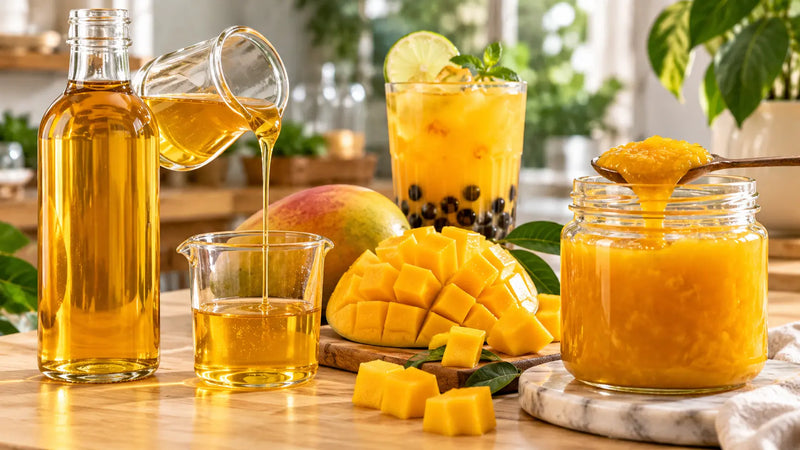
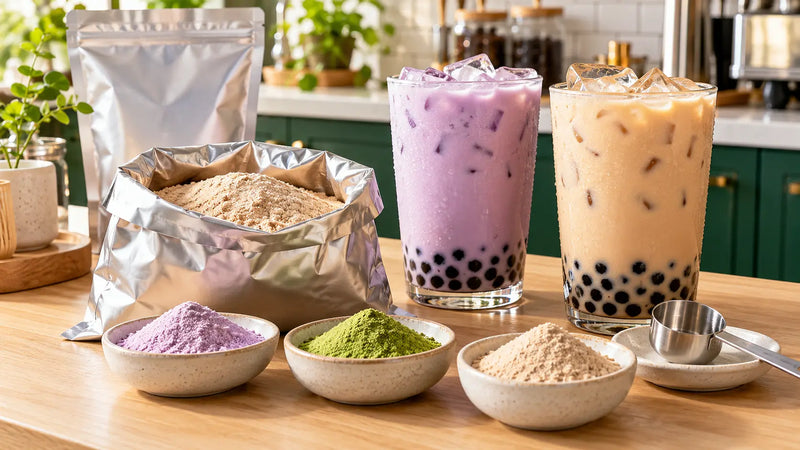
A standard full-sugar bubble tea contains 35 to 50 grams of added sugar, roughly equivalent to a can of cola. The good news is that sweetness in bubble tea comes from several different sources, and each one can be reduced independently.
This guide covers exactly how to cut the sweetness whether you are ordering at a shop or making it at home.
Where the Sweetness Actually Comes From
Most people assume the sugar level they choose controls everything. It does not. Sugar level only affects the base syrup added to the drink. The rest of the sweetness comes from other ingredients entirely. Understanding each source is the fastest way to bring your overall sweetness down.
|
Sweetness Source |
What It Is |
How Sweet |
|
Base syrup (fructose or simple syrup) |
Controlled by your sugar level % |
High |
|
Flavoured powder or pre-mix |
Built into milk tea bases |
Medium-High |
|
Brown sugar syrup |
Used in tiger stripe drinks |
Very High |
|
Tapioca pearls |
Soaked in sugar syrup after cooking |
Medium |
|
Fruit syrup |
Used in fruit teas |
Medium |
|
Sweetened creamer |
Powdered non-dairy creamer |
Medium |
|
Cheese foam |
Contains sugar alongside dairy |
Medium |
|
Egg pudding |
Contains sugar, eggs and dairy |
Medium-High |
|
Grass jelly / aloe vera / coconut jelly |
Plant-based, low in sugar |
Low |
How to Order Less Sweet Bubble Tea at a Shop
Start at 50% Sugar, Not 0%
Most shops offer sugar levels of 0%, 25%, 50%, 75%, and 100%. Dropping straight to 0% removes all base syrup but leaves every other sweetness source untouched, which often produces a flat, unbalanced flavour. Start at 50%.
Research on taste perception suggests most people cannot tell the difference between 50% and 75% sugar after a few visits, and your palate adjusts over time.
Choose a Fruit Tea Over a Milk Tea
Fruit teas are naturally lighter than milk teas. They use a brewed tea base, fruit syrup, and water rather than sweetened creamers or flavoured powders. At the same sugar level, a fruit tea will consistently taste less sweet and contain fewer total calories than a milk tea equivalent.
For a full breakdown of the differences, see milk tea vs fruit tea.
Watch What Your Sugar Level Does Not Control
Ordering 0% sugar still leaves you with sweetened pearls, any brown sugar drizzle, and your creamer or powder base. Brown sugar milk tea is a good example. The tiger stripe effect comes from brown sugar syrup painted on the cup, which adds significant sweetness regardless of the sugar level you choose. If you want a genuinely lower-sugar drink, be specific about the toppings and base as well.
Swap Your Toppings
Grass jelly, aloe vera, and coconut jelly are the lowest-sugar topping choices. Classic tapioca pearls are cooked and then soaked in sugar syrup, which adds sweetness beyond what the pearls themselves contain. Popping boba is slightly lower in sugar than traditional pearls. For a full guide to what each topping contains, see bubble tea toppings explained.

How to Make Less Sweet Bubble Tea at Home
Making bubble tea at home gives you complete control over every ingredient. According to the NHS, adults should consume no more than 30 grams of free sugars per day. A single full-sugar bubble tea can exceed that limit before you have eaten anything else. For more on how milk and creamer choices affect your drink, see real milk vs non-dairy creamer in bubble tea.
Start with Unsweetened Brewed Tea
Brew your own tea base using loose leaf or tea bags with no added sugar. Black, green, oolong, and jasmine tea all produce excellent bubble tea bases with zero added sugar. Let the tea cool fully before building your drink. A well-brewed tea base has enough natural flavour to carry the drink without needing much added sweetness.
Control Your Syrup Amount
Standard bubble tea recipes use 30 to 45ml of simple syrup per 500ml drink. Start with 10 to 15ml and adjust from there. You can always add more but you cannot take it out. Using a measuring spoon rather than free-pouring syrup is the single most effective habit for consistently producing a less sweet drink at home.
Cook Pearls in Less Sugar
Tapioca pearls are typically soaked in brown sugar syrup after cooking to add sweetness and prevent sticking. Soak them in plain water instead, or use a very light sugar solution. The pearls will still have their characteristic chew. The sweetness reduction is noticeable, especially if you are already reducing your base syrup.
Lower-Sugar Bubble Tea Order Ideas
-
Jasmine green tea, 25% sugar, aloe vera: light, floral, very low in sugar
-
Passion fruit fruit tea, 50% sugar, coconut jelly: fruity without the creamer sweetness
-
Oolong milk tea, 25% sugar, grass jelly, oat milk: rounded flavour with minimal syrup
-
Lychee fruit tea, 0% sugar, popping boba: the fruit syrup in the drink carries enough sweetness on its own
-
Matcha latte, 25% sugar, no toppings: earthy and smooth, the matcha bitterness balances the reduced sweetness well
Conclusion
The easiest change you can make is dropping from 100% to 50% sugar when ordering. Beyond that, switching to a fruit tea base, choosing low-sugar toppings like grass jelly or aloe vera, and avoiding brown sugar drinks unless you specifically want a sweeter drink will bring your total sugar intake down significantly. At home, measuring your syrup rather than free-pouring it makes the biggest single difference.
Frequently Asked Questions
What sugar level should I ask for to make bubble tea less sweet?
Start at 50%. Most people find this a natural reduction that still tastes like bubble tea. If you want less, go to 25%. 0% removes all base syrup but leaves sweetness from pearls, creamers, and toppings.
Does the sugar level control all the sweetness in bubble tea?
No. Sugar level only controls the base syrup. Tapioca pearls, flavoured powders, creamers, fruit syrups, brown sugar drizzle, and toppings like egg pudding all add sweetness independently.
Which bubble tea has the least sugar?
Fruit teas at 25% or 0% sugar with low-sugar toppings such as grass jelly or aloe vera are the lightest options. Avoid brown sugar drinks and milk teas with sweetened powders if you want to minimise sugar.
Can I ask a bubble tea shop to make my drink less sweet?
Yes. Every reputable bubble tea shop lets you choose your sugar level, usually between 0% and 100%. You can also ask them to use less syrup in the topping or skip certain toppings that add sweetness.
How do I make bubble tea at home with less sugar?
Brew unsweetened tea as your base, start with 10 to 15ml of syrup per 500ml drink, and soak your tapioca pearls in plain water rather than sugar syrup. These three steps cut sugar significantly without changing the drink's character.
Is 0% sugar bubble tea actually sugar-free?
No. 0% sugar removes only the added base syrup. Tapioca pearls, sweetened powders, fruit syrups, and toppings all still contain sugar. A 0% sugar milk tea with pearls still contains meaningful amounts of sugar from the other ingredients.