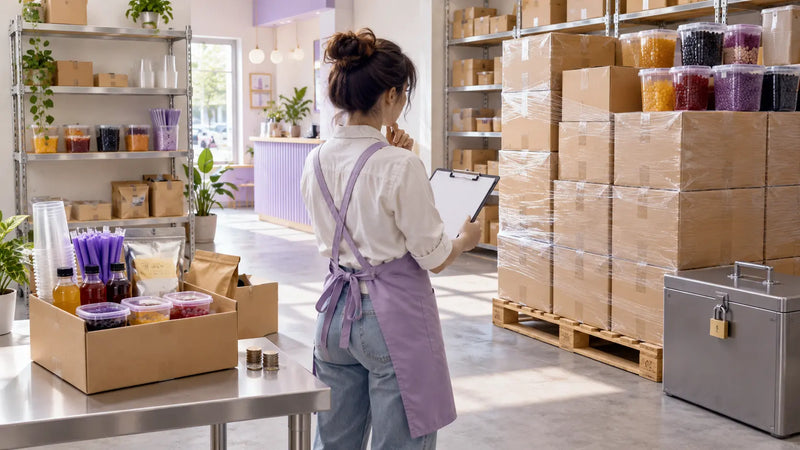
A mid-range milk tea shop equipment setup costs between £3,000 and £7,000 for the core machines alone. Buy the wrong kit at the start and you end up replacing it once volume picks up.
This guide covers everything you need, what it costs, and which items are must-haves from day one.
Core Equipment: The Machines That Run Your Shop
These are the pieces of equipment your shop cannot function without. Every drink on your menu depends on at least one of them working correctly.
Cup Sealing Machine
A cup sealing machine seals every drink you serve and defines the takeaway bubble tea format. Models range from £400 for semi-automatic to £1,500 for fully automatic. For a full guide on choosing the right one, see our bubble tea machine guide.
- Semi-automatic sealers suit shops doing under 100 cups per day. Fully automatic models pay back faster above 300 cups per day
- 90mm is the standard cup diameter for most UK bubble tea setups. Confirm this before ordering cups or sealing film
Water Boiler / Tea Urn
A commercial water boiler is essential for brewing tea and cooking tapioca pearls. Domestic kettles cannot keep up. Commercial units cost £300 to £600.
- Look for a model with thermostatic control to hold water at the right temperature between uses without reboiling
- If you plan to batch-brew more than one tea base simultaneously, consider a second boiler from day one
Shaker Machine
A shaker machine blends every drink to a consistent texture and temperature. Electric models cost £500 to £1,200.
- Confirm shaker cup compatibility with your machine before ordering extras. Not all cups fit all models
- Electric shakers complete a cycle in around 10 seconds versus 30 to 60 seconds for manual shaking at peak service
Fructose Dispenser
A fructose dispenser pumps an exact dose of sweetener into each cup at the press of a button. Without one, sweetness varies between staff and between shifts. See our guide to fructose dispensers for bubble tea shops for model recommendations.
- A temperature control function keeps fructose at the right viscosity for accurate dispensing throughout the day
- 6-litre models suit small cafés. Mid-volume shops typically need 8 to 10 litres to last a full service without refilling
Induction Hob and Tapioca Cooking Pot
A commercial-grade induction hob (£80 to £300) paired with a large stainless steel pot is the standard pearl cooking setup. It is faster, safer, and easier to clean than gas in a compact commercial kitchen.
- A stainless steel pot of at least 10 litres gives you enough capacity for a full pearl batch during a busy service
- Induction hobs have no open flame, which reduces fire risk and simplifies your commercial kitchen safety assessment
Commercial Refrigeration
You need at least one commercial refrigeration unit to store syrups, dairy, and toppings. According to the Food Standards Agency, perishable food should be stored at 5°C or below. Under-counter units cost £400 to £800; upright fridges run £600 to £1,200.
- Check internal dimensions before buying. Your largest syrup bottles and topping containers need to fit comfortably on the shelves
- Under-counter units suit kiosk formats. An upright fridge is a better fit for a full café with a wider ingredient range
Ice Machine
Most bubble tea drinks are served cold over ice. A commercial ice machine starts at around £500 and produces a consistent supply throughout the day without interruption.
- Position your ice machine away from heat sources like the water boiler. Ambient heat reduces ice production output
- A countertop model producing 20 to 40kg per day is enough for most new shops. Scale up once you know your daily volume

Cups, Packaging, and Disposables
These are not afterthoughts. They are part of every single drink you serve. Running out of cups or sealing film during a busy service is as disruptive as a machine going down. For full guidance on custom branded versions of these items, see our guide to custom branded packaging for bubble tea.
Cups and Lids
PET plastic cups are the standard for cold bubble tea in 500ml and 700ml sizes. Your cups must match your sealing machine diameter, so confirm compatibility and regulations before buying in bulk.
- Order a sample batch before committing to bulk quantities. Confirm the fit with your sealing machine before buying at volume
- PET cups are clear and ideal for showcasing drink layers. PP cups are more suitable for hot drinks
Sealing Film
Sealing film comes in rolls matched to your cup diameter and sealing machine model. Always keep at least two rolls in stock.
- Film must match both your cup diameter and machine type. Mixing these is the most common ordering error new shops make
- Keep at least two rolls in stock at all times. Add sealing film to every ingredient restock order so you never run short
Straws, Bags, and Other Disposables
Fat straws, carrier bags, and napkins need to be on every regular order. Buying these from your main ingredient supplier consolidates deliveries and reduces cost.
- Fat straws (12mm diameter) are needed for tapioca pearls. Standard straws (6 to 8mm) suit fruit teas and drinks without pearls
- Buying disposables from your main ingredient supplier consolidates deliveries and often reduces per-unit cost at volume
Supporting Equipment
POS System
A point-of-sale system handles orders, payments, and sales reporting. Square is free to start; feature-rich systems like Lightspeed or Epos Now run £40 to £80 per month.
- Choose a system that handles drink customisation (sugar level, milk choice, toppings) as standard. Generic retail POS systems often cannot
- Square is free to start and suits new shops. Upgrade to a system with stock management once you know your weekly usage patterns
Measuring Equipment
You need measuring jugs, spoons, and pearl nets from day one. These cost under £50 total but make the biggest difference in drink consistency across staff.
- Pearl nets (fine mesh strainers) are essential for draining cooked tapioca quickly. Buy two so service is never interrupted
- Label each measuring jug for a specific ingredient. It speeds up service and prevents cross-contamination between syrups and powders
Storage Containers
Food-grade airtight containers are needed for tea leaves, powders, and uncooked pearls. The Health and Safety Executive sets out labelling and container standards for commercial catering premises.
- Clear containers with lids let you see stock levels at a glance without opening them during a busy service
- Label every container with the ingredient name and opening date from day one. It becomes essential once you have multiple staff
Cleaning Equipment
Cleaning equipment is the most overlooked category on the startup list. Budget £50 to £100 per month for sanitising spray, food-safe cloths, brushes, and bin liners.
- Colour-code your cleaning cloths by surface type (food contact, non-food contact, floor). It is a basic food hygiene standard
- Schedule a full equipment clean at the end of every service, not just at the end of the day, to pass routine FSA inspections

Must-Have vs Nice-to-Have Checklist
|
Equipment |
Priority |
Approx Cost |
|
Cup sealing machine |
Must-have |
£400 – £1,500 |
|
Water boiler / tea urn |
Must-have |
£300 – £600 |
|
Shaker machine |
Must-have |
£500 – £1,200 |
|
Fructose dispenser |
Must-have |
£200 – £500 |
|
Induction hob |
Must-have |
£80 – £300 |
|
Tapioca cooking pot |
Must-have |
£30 – £80 |
|
Commercial refrigeration |
Must-have |
£400 – £1,200 |
|
Ice machine |
Must-have |
£500 – £2,000 |
|
POS system |
Must-have |
£0 – £80/month |
|
Measuring jugs and spoons |
Must-have |
£20 – £50 |
|
Storage containers |
Must-have |
£50 – £150 |
|
Cleaning equipment |
Must-have |
£50 – £100/month |
|
Backup sealing machine |
Nice-to-have |
£400 – £900 |
|
Dedicated tapioca pearl cooker |
Nice-to-have |
£200 – £800 |
|
Display refrigerator |
Nice-to-have |
£500 – £1,500 |
|
Blender (for smoothie drinks) |
Nice-to-have |
£200 – £600 |
|
Label printer |
Nice-to-have |
£100 – £300 |
Disclaimer: Figures are estimates based on 2026 UK market pricing. Contact Next Gen Boba for current equipment pricing.
Conclusion
The core equipment list for a UK milk tea shop comes down to seven machines: a sealer, water boiler, shaker, fructose dispenser, induction hob, refrigeration, and ice machine. Everything else supports those seven. Get the core kit right, buy cups and sealing film from the same supplier, and your shop is operationally ready from day one.
Frequently Asked Questions
What equipment do I need to open a milk tea shop in the UK?
The core kit is a cup sealing machine, water boiler, shaker machine, fructose dispenser, induction hob, commercial refrigerator, and ice machine. You also need cups, sealing film, straws, and a POS system before you can trade.
How much does milk tea shop equipment cost in the UK?
A mid-range setup covering the core machines costs £3,000 to £7,000. High-volume or fully automated setups can reach £10,000 or more. Individual machines range from £80 for an induction hob to £1,500 for a fully automatic sealing machine.
Do I need a sealing machine for a milk tea shop?
Yes. A cup sealing machine is non-negotiable for takeaway bubble tea. It applies the film lid that keeps drinks sealed and spill-proof. Choose a machine that matches your cup diameter and expected daily volume.
What is a fructose dispenser and do I need one?
A fructose dispenser pumps a precise amount of sweetener into each cup at the press of a button. It ensures consistent sweetness across every drink regardless of who is making it. It is a must-have for any shop serving more than a handful of drinks per day.
Can I use a domestic kettle instead of a commercial water boiler?
No. Domestic kettles are not built for continuous commercial use and cannot maintain the output needed during a service. A commercial water boiler is a day-one requirement.
What POS system do most bubble tea shops use in the UK?
Square is a popular starting point because of its free hardware and simple setup. More established shops often move to systems like Lightspeed or Epos Now for better stock management and reporting features.